
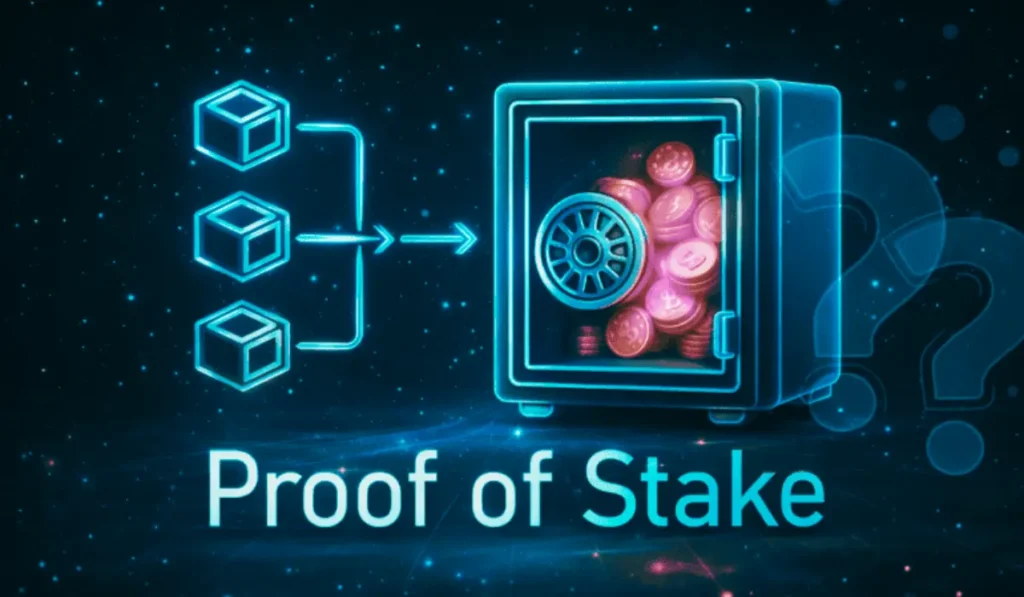
Blockchain technology has transformed the digital world by supporting secure, decentralized transactions without the interference of a central authority. One of the most important innovations in blockchain is the consensus mechanism, which makes sure that all participants agree on the state of the network. It has emerged as a more energy-efficient consensus model than Proof of Work (PoW)
Secure Proof of Stake(SPoS) is an advanced version of PoS that enhances network security, reduces vulnerabilities, and boosts trust among participants. This article explores Secure Proof of Stake, how it works, core security features, real-world uses, and its future.
What is Secure Proof of Stake?
Secure Proof of Stake is an advanced version of the Proof of Stake consensus mechanism utilized by blockchain networks to process transactions and create new blocks. It solves complex mathematical problems through validators who are selected based on the amount of cryptocurrency they stake in the network.
The term “secure” is used to indicate that additional security measures are followed to safeguard the blockchain from manipulations, attacks, and malicious behaviours. These include penalties for advanced validation protocols, dishonest validators, and decentralized governance structures. The main goal is to support a secure, transparent, and efficient blockchain with lower energy consumption than traditional mining systems.
How Secure Proof of Stake Works?
The working principle followed by Secure Proof of Stake involves the following steps:
- Staking Assets
Participants lock a specific amount of cryptocurrency into the network as collateral. This stake is considered their honesty.
- Validator Selection
The network considers various factors in selecting validators. These include staking duration, amount staked, and sometimes randomization mechanisms. This promotes fairness and prevents centralization.
- Transaction Validation
Chosen validators verify transactions and help create new blocks. Other validators check and confirm the new blocks before they are added to the blockchain.
- Reward Distribution
Rewards are distributed among validators for validating transactions and securing the network. These rewards come from newly issued tokens and transaction fees.
- Penalties for Misconduct
If a validator tries to cheat or behave maliciously, through a process called slashing, a portion of their stakes is confiscated.
Core Security Features of Secure Proof of Stake
Secure Proof of Stake has several security features to protect against attacks. These include:
- Slashing mechanisms to punish validators who behave maliciously. A portion of their stake is confiscated.
- Decentralized validation by using multiple validators, so that one entity doesn’t gain complete control.
- Random validator selection makes it difficult for attackers to predict validator assignments.
- Attacking the network can be financially risky because validators have to stake valuable assets.
- Most secure proof-of-stake systems integrate monitoring tools that quickly detect suspicious activities and react to prevent threats.
Advantages of Secure Proof of Stake
- Secure Proof of Stake utilizes very little energy in comparison to Proof of Work, which requires huge computational power. So, it is environment-friendly.
- The network is protected from attackers using financial penalties, advanced consensus rules, and decentralized validation.
- This mechanism processes transactions quickly, thereby supporting a larger number of applications and users.
- Users don’t have to invest in expensive mining equipment to engage in network validation.
- Faster transaction confirmations in comparison to many Proof of Work systems.
Challenges and Limitations
Secure Proof of Stake has some challenges and limitations as well.
- Possibility of centralization because users with larger stakes might have better chances of becoming validators.
- Governance complexity due to handling penalties, rules, and protocol upgrades in big decentralized networks.
- Without continuous development, the network might become exposed to attacks.
- Lack of internet connectivity and reliable systems can hinder network activity.
Secure Proof of Stake vs. Proof of Work
| Feature | Secure Proof of Stake (SPoS) | Proof of Work (PoW) |
| Validation | Uses stake coins | Uses mining power |
| Energy Use | Low | High |
| Speed | Faster | Slower |
| Hardware | Menial requirements | Expensive mining equipment |
| Scalability | Better | More limited |
| Environmental Impact | Eco-friendly | Energy-intensive |
Real-World Uses
It is widely used across modern blockchain platforms. SPoS supports decentralized finance (DeFi) applications, cryptocurrency transactions, gaming ecosystems, non-fungible tokens (NFTs), and enterprise blockchain solutions. SPoS is preferred by organizations because of its security, sustainability, and efficiency.
The Future of Secure Proof of Stake
Secure Proof of Stake seems to be a promising mechanism. Blockchain developers are introducing new methods, such as cross-chain interoperability, enhanced validator selection methods, and advanced security protocols.
As blockchain becomes widely adopted by businesses, governments, and consumers, the need for secure and efficient consensus mechanisms will continue to increase. The Secure Proof of Stake mechanism is sure to play a major role in promoting scalable and trustworthy blockchain networks.
Final Thoughts
Secure Proof of Stake is an advanced version of the Proof of Stake consensus mechanism created to offer energy efficiency, security, and scalability. It forms a secure environment for network governance and transaction validation by utilizing staked assets, penalty systems, and validator rewards. This method seems promising as the blockchain technology grows because of its ability to solve limitations with traditional mining-powered systems.